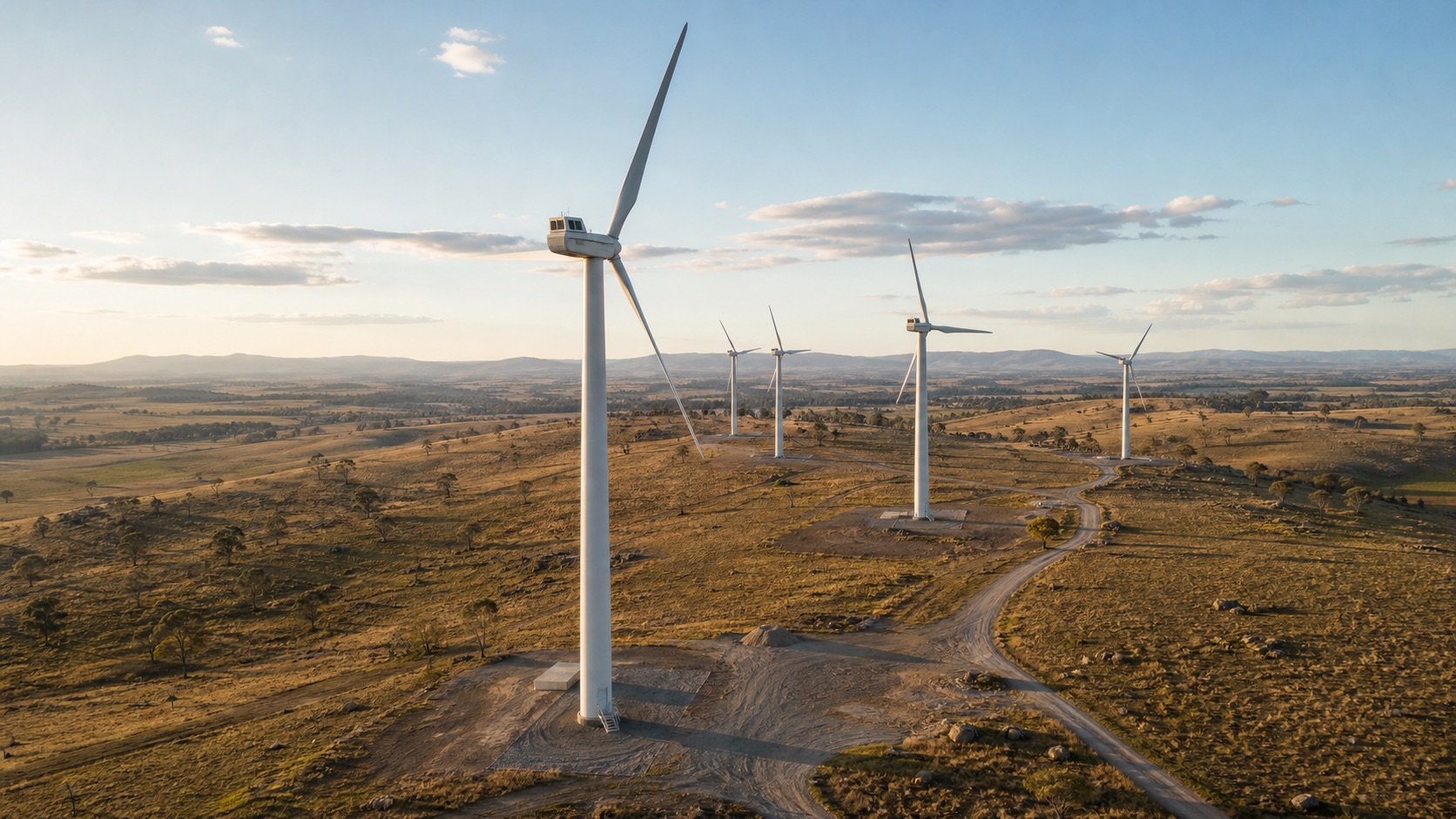

From turbine pads and access roads to a restored ridgeline.
Towers, blades, nacelles, hardstands, cables and redundant access works are removed or remediated, then the landform, drainage and vegetation are repaired for the agreed future land use.
Utility-scale decommissioning, recovery and restoration
A specialist platform for safely dismantling decommissioned renewable-energy assets, recovering valuable materials and returning project land to healthy, beautiful environments.
Typical solar panel service life means end-of-life planning now needs to be built into asset strategy.
Forecast Australian solar panel waste by 2035 shows the scale of the recovery challenge ahead.
Steel, copper, aluminium, glass, electronics and blades need separated pathways before removal begins.
Before and after restoration
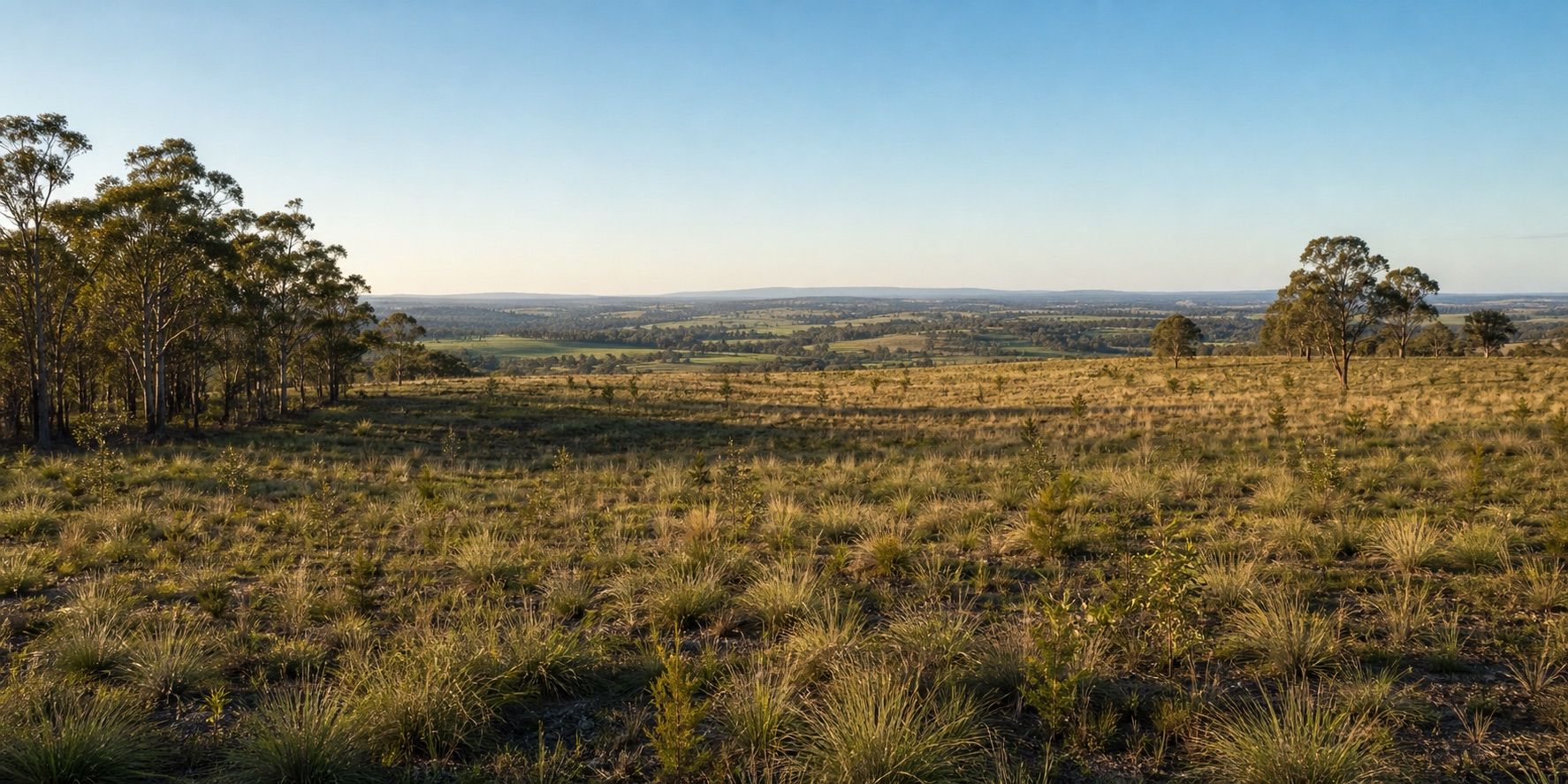
The standard we design for is zero visible industrial footprint after closeout: no redundant towers, panels, tracks, hardstands, foundations, fencing or disturbed ground left behind.
Towers, blades, nacelles, hardstands, cables and redundant access works are removed or remediated, then the landform, drainage and vegetation are repaired for the agreed future land use.
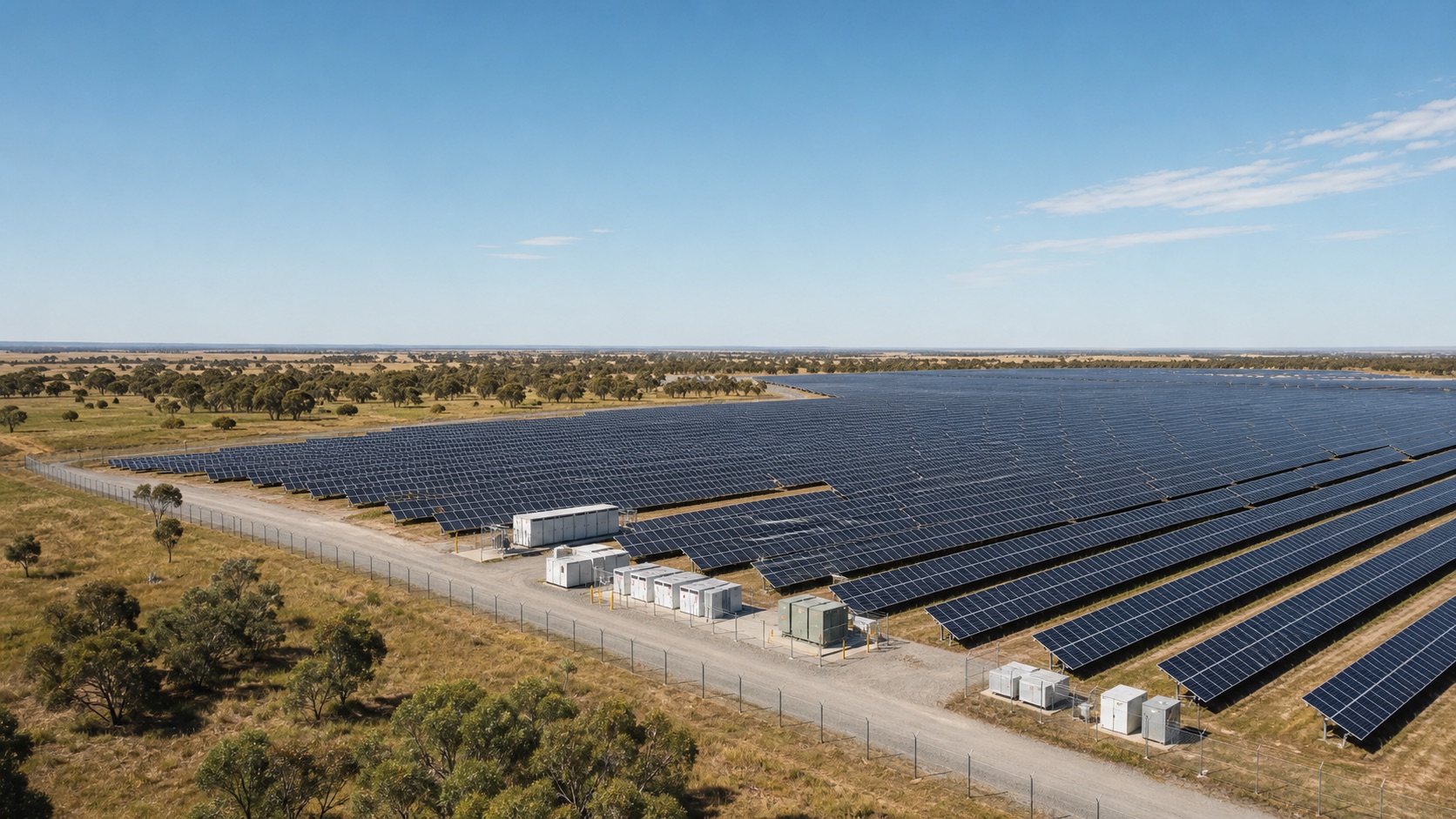
Modules, racking, piles, fencing, inverters and cabling are removed through separated recovery streams, while compacted ground and disturbed areas are rehabilitated back into the surrounding environment.
Representative restoration visuals for launch. Replace with verified project photography and monitoring records as completed sites become available.
Why this market needs a dedicated leader
Early wind and solar projects are moving toward repowering, major component replacement or full removal. Owners need a clear pathway before decommissioning becomes urgent.
Decommissioning plans, financial security, resource recovery records and rehabilitation evidence are becoming central to approvals, community trust and investor confidence.
Removal is not finished when the last panel or turbine section leaves site. Tracks, hardstands, foundations, drainage and vegetation need a managed restoration closeout.
The WSD method
We structure decommissioning as a controlled infrastructure project: measured, sequenced, documented and transparent to landowners, regulators, asset owners and global corporate stakeholders.
Map turbines, panels, inverters, substations, cabling, foundations, roads, hardstands, batteries and site constraints.
Assign every major material stream to reuse, resale, recycling, specialist processing or compliant disposal.
Build lifting plans, electrical isolation, traffic controls, environmental controls and stakeholder notifications.
Dismantle turbines, arrays and balance-of-plant assets with minimal land disturbance and controlled logistics.
Separate metals, glass, e-waste, concrete and composites with weight tickets, chain-of-custody records and photos.
Remove redundant infrastructure, regrade disturbed areas, restore drainage and support revegetation or productive land use.
Services
Circular demolition
The strongest decommissioning projects sort assets before they hit the ground. That is how owners reduce landfill exposure, protect ESG commitments and keep valuable materials moving back into productive use.
Build a recovery planBeautiful environments returned
Wind and solar projects can change ridgelines, paddocks, access tracks and drainage paths. Our restoration approach focuses on returning land to its agreed future use: native habitat, agriculture, grazing, conservation or clean development-ready ground.
Regrade hardstands, turbine pads, trenches and access areas so water moves naturally and erosion risk is reduced.
Separate, protect and reinstate topsoil where possible, with attention to compaction, contamination and sediment control.
Support native revegetation, pasture return or landowner-specified planting with documented establishment criteria.
Deliver photo records, recovery certificates, disposal receipts and closeout packs fit for board and regulator review.
Built for global asset owners
Multinational owners, developers, OEMs, financiers and insurers need one accountable decommissioning partner that can coordinate local crews while maintaining a consistent governance standard across regions.
One program office for scope, risk, procurement, permits, reporting and stakeholder communication.
Regional operators matched to site conditions, transport routes, language, regulation and labour requirements.
Clean dashboards for recovery rates, costs, defects, schedule, incidents, emissions and restoration progress.
Designed around product stewardship, circularity, social licence and landowner handback rather than simple disposal.
Project enquiry
Send the asset type, approximate size, location and timeframe. We will shape the first decommissioning pathway: risks, recovery streams, approvals, logistics and restoration outcomes.